Warning signs of a sewer line problem
A single slow drain is a fixture problem. When the whole house starts acting up, the sewer line is the suspect. The tell-tale sign is more than one fixture backing up at once, especially the lowest drains in the home, along with gurgling toilets, water rising in a tub when the washer drains, and a sewage odor inside or in the yard. Left alone, these lead to raw sewage backing up into the house.
Outside, a sewer problem often shows on the surface. Watch for an unusually green or soggy patch in the lawn over the pipe's path, a sinkhole or depression forming, or new pest activity drawn to the moisture. Any of the signs below is worth a camera inspection before it becomes a backup.
- Multiple fixtures backing up or draining slowly at the same time
- Toilets gurgling or losing water when other fixtures run
- Sewage smell indoors, near floor drains, or in the yard
- Recurring main-line clogs that keep coming back after snaking
- A wet, sunken or unusually lush strip of lawn over the sewer line
- Sewage backing up at the lowest drain in the house
Sewer camera inspection: what it shows
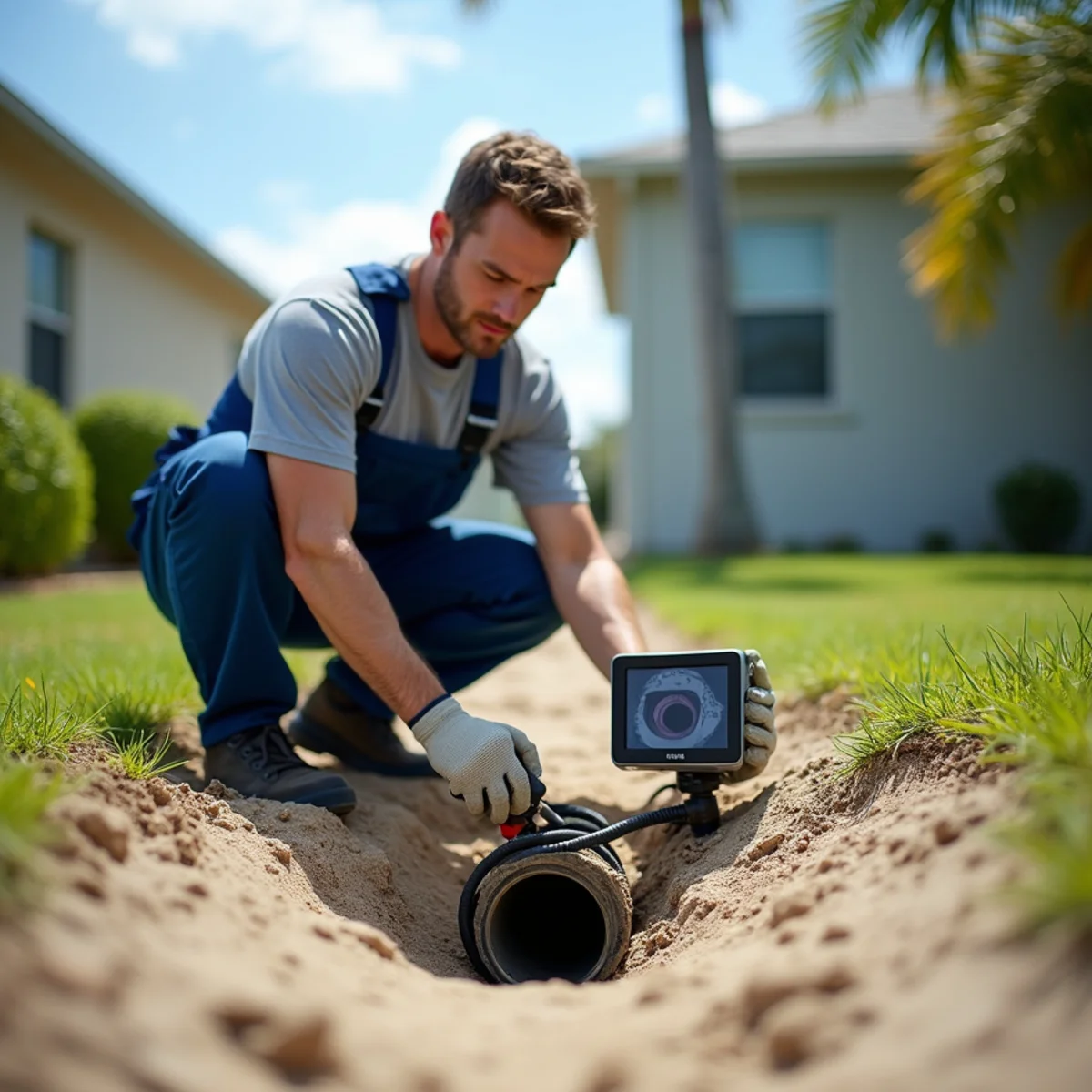
We never quote a sewer repair blind. A camera inspection is the foundation of an honest diagnosis. We feed a waterproof camera through the cleanout and down the line, watching a live feed of the pipe's interior. It shows the pipe material, its condition, and precisely where and what the problem is: a crack, a collapse, roots pushing through a joint, a low spot holding water, or scale narrowing an old cast iron line.
The camera also locates the defect, so if a dig is needed we know exactly where, rather than trenching the whole yard on a hunch. This is the same inspection we strongly recommend to anyone buying an older home in the area, because a failing sewer line is one of the most expensive surprises a home can hide. Our related drain cleaning service uses the same camera to tell a simple clog from a structural problem.
Sewer backing up or smelling?
Call (858) 363-8298. We will camera the line to find the real cause before quoting a repair.
Cast iron drain pipe failure in pre-1975 Tarpon Springs homes
Tarpon Springs has a lot of character homes built before 1975, and those homes almost always have cast iron drain and sewer pipes. Cast iron was built to last, but not forever in Florida ground. Over fifty-plus years the inside of the pipe scales and rusts, the wall thins from the inside out, and the bottom of the pipe, where waste sits longest, corrodes away first into what plumbers call channeling.
Once cast iron reaches that stage, cleaning only buys time. The pipe keeps snagging waste, keeps clogging, and eventually cracks or collapses. Under a slab-on-grade home, that failure is beneath the concrete, which is why diagnosis matters so much before you commit to a repair approach. Our guide on cast iron drain pipes in Florida walks through the lifespan and your options in detail.
Root intrusion and bellied lines
The mature oaks and other trees that shade these neighborhoods are hard on sewer lines. Roots seek water, and the tiny bit of vapor escaping a pipe joint draws them in. Once a root threads into a joint or crack, it grows into a dense mat inside the pipe, catching waste and causing repeated backups. Cutting the roots clears the line temporarily, but they grow back until the compromised section is repaired.
Bellies are the other common structural problem here. Sandy soil and a high water table let a section of pipe sag over time, creating a low spot that holds standing water and solids instead of draining. A bellied line clogs again and again no matter how often it is cleaned, because the slope that carries waste away is gone. The camera shows a belly clearly, and the only real fix is to re-support or replace that section.
Repair options: spot repair, pipe lining, pipe bursting, full replacement
There is no single right answer for every sewer line. The best option depends on the pipe's material, the extent of the damage, and where the line runs. We lay out the choices with honest pros and cons so you can weigh cost against disruption.
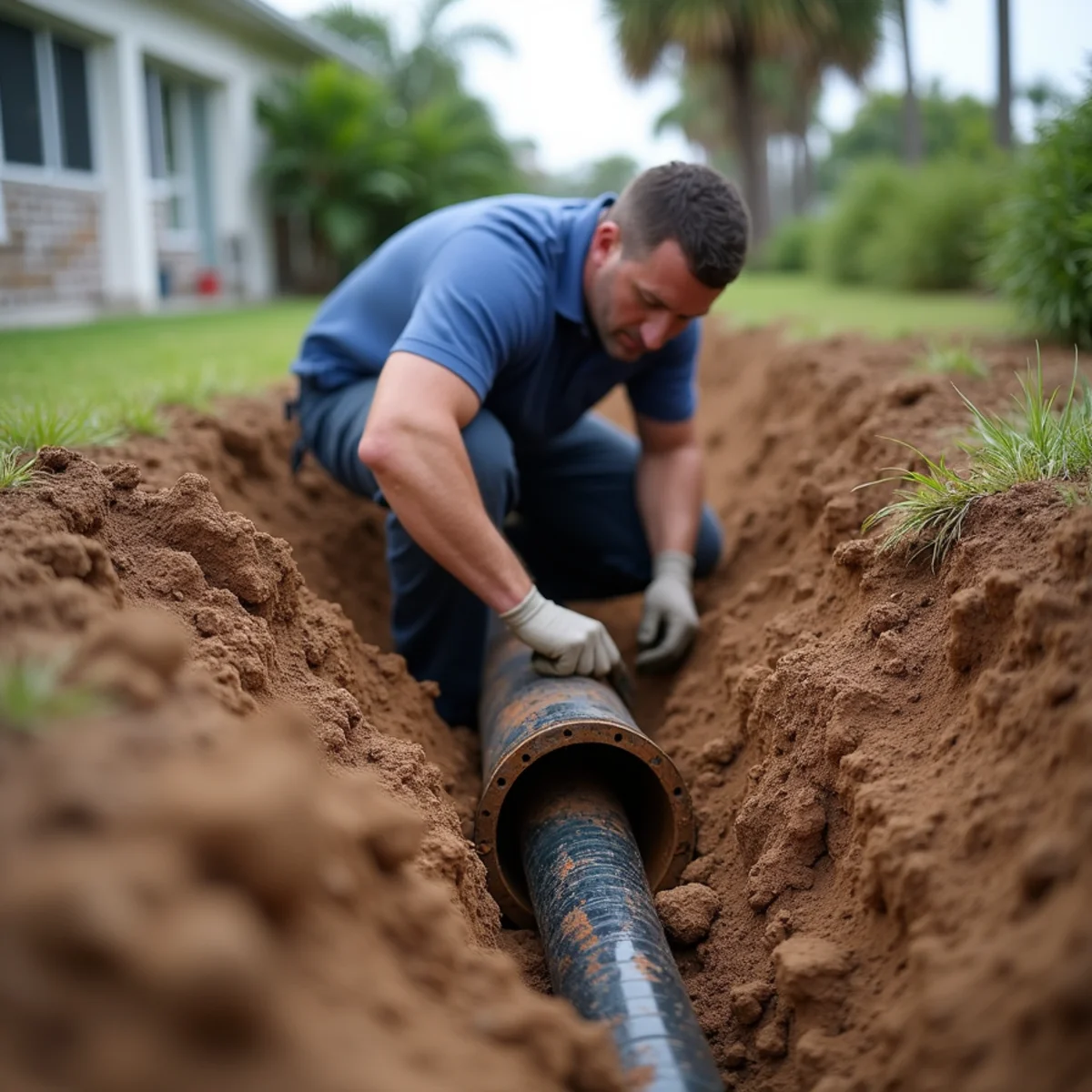
- Spot repair — for a single localized crack or break, we excavate just that section and replace it. The least invasive when the rest of the line is sound.
- Pipe lining (CIPP) — a resin liner is cured inside the existing pipe to create a new pipe within the old one, with little to no digging. Ideal when the host pipe still holds its shape.
- Pipe bursting — a new pipe is pulled through the old one while it fractures the old pipe outward, replacing the line with minimal trenching.
- Full replacement — when a line is collapsed, badly bellied or fully deteriorated, we replace it, using trenchless methods wherever the situation allows.
Trenchless methods, lining and bursting, are attractive precisely because they spare your landscaping, driveway and slab. They are not right for every situation, and we will tell you honestly when open excavation is the sounder choice. Whatever the method, every plumber we send is licensed and insured in Florida.
Need a plumber in Tarpon Springs now?
Want to know whether your line can be fixed without digging up the yard? Call (858) 363-8298 for a camera diagnosis.
Sewer backups after storm surge and heavy rain
Storms put real stress on the area's sewer system. When Hurricane Helene pushed surge into Tarpon Springs in September 2024, it flooded Historic Downtown and the Anclote area and knocked out sewer lift stations, and backups followed across the community. Heavy rain and a high water table can also infiltrate cracked lines, overwhelming a system that works fine in dry weather.
If your drains back up during or after a storm, treat it as urgent and stop using water until the line is checked. Our emergency plumbing team handles storm-driven sewer backups around the clock, and our guide to plumbing after a flood in Tarpon Springs covers what to do and what to watch for in the weeks that follow.
Your lateral vs the city main: who is responsible
One question comes up on almost every sewer call: is this my problem or the city's? In general, the homeowner owns and maintains the sewer lateral, the pipe that runs from the house to where it connects to the public main, and the city maintains the main itself. That means a clog or break in the lateral, including the portion under your yard, is typically the homeowner's responsibility.
The exact boundary can vary, so before any repair we help you determine where your responsibility ends. If a job's value exceeds a certain threshold, a Notice of Commencement filed through Tarpon Springs GoPost may be required for the permit; verify the current threshold, as it has been $5,000 in the past but can change. We handle permitting so the repair is documented and inspected properly.
Cost factors, not a flat price
Sewer repair cost depends on depth, length, pipe material, the repair method, and whether the line runs under a slab, driveway or landscaping. As directional market ranges, not a quote, sewer repairs commonly run about $1,000 to $5,000 or more, and a camera inspection about $150 to $400. Your final price is confirmed at the property before work starts.
Areas we cover around Tarpon Springs
We repair and replace sewer lines throughout Tarpon Springs, with particular experience in the older cast-iron homes near Historic Downtown, the Sponge Docks, Whitcomb Bayou and along the Anclote River. We also serve Palm Harbor, Holiday and Trinity; see the full list on our service areas page. When a sewer problem starts as a hidden leak, our leak detection team pinpoints it before it undermines the slab.
Fix the sewer line the right way
Call (858) 363-8298 for a camera inspection first, then an honest repair plan for your Tarpon Springs home.