After storm surge or flooding, check your plumbing in this order: assume flood water is contaminated and protect yourself, confirm the sewer system is working before using drains, inspect the water heater before relighting or restoring power to it, look for sewer and drain line damage, and document everything for insurance. Do not use fixtures if there is any sign of a sewer backup or a lift-station outage in your area. Flooding stresses the whole wastewater system, not just your home, and using drains too soon can push contaminated water back inside. Here is the full checklist for Tarpon Springs homes.
Remember what Helene showed us
Hurricane Helene in September 2024 flooded downtown Tarpon Springs and the Anclote area and knocked out sewer lift stations across the region. When lift stations lose power, sewage cannot be pumped where it needs to go, which causes backups into low-lying homes even after the surface water recedes. That event is a reminder that the danger after a flood is not only the water you can see; it is the wastewater system's ability to function. Before you resume normal water use, find out whether your area's sewer service and lift stations are back online.
The timing lesson from Helene is worth repeating: the surge water drained from streets long before the sewer system was fully back to normal. Homeowners who rushed to flush toilets and run laundry the moment the yard was dry sometimes pushed sewage back into their own homes because the lift station serving them was still down. Patience in those first hours is not just caution; it is what prevents a second, avoidable flood of contaminated water inside the house.
Contamination safety first
- Treat all flood water as contaminated with sewage, chemicals, and bacteria; wear gloves, boots, and eye protection.
- Keep children and pets away from flooded areas and anything the water touched.
- Do not eat food or use items that contacted flood water.
- Ventilate the home and begin drying within the EPA's 24 to 48 hour window to limit mold.
- If you are on a private well, do not drink or cook with the water until it has been tested and disinfected; assume it is unsafe after flooding.
- Watch for boil-water notices from your utility and follow them.
Check the sewer and drains before using them
Do not flush toilets or run drains until you know the sewer system can accept flow. If drains gurgle, are slow, or push water up when you run them, stop and wait. Signs of sewer trouble after a flood include backups at the lowest fixtures, sewage odors, and standing water around cleanouts. Debris and silt can also enter and clog drain lines during a flood, and shifting ground can crack or misalign buried pipes. A camera inspection through our sewer line repair service confirms whether the line is intact or damaged before you rely on it again.
When the whole system is down
If a lift station serving your area has lost power, the problem is not in your house and running water will only make it worse. Minimize water use until the utility confirms service is restored, and keep our line saved for the moment you need help fast.
Water heater after flooding
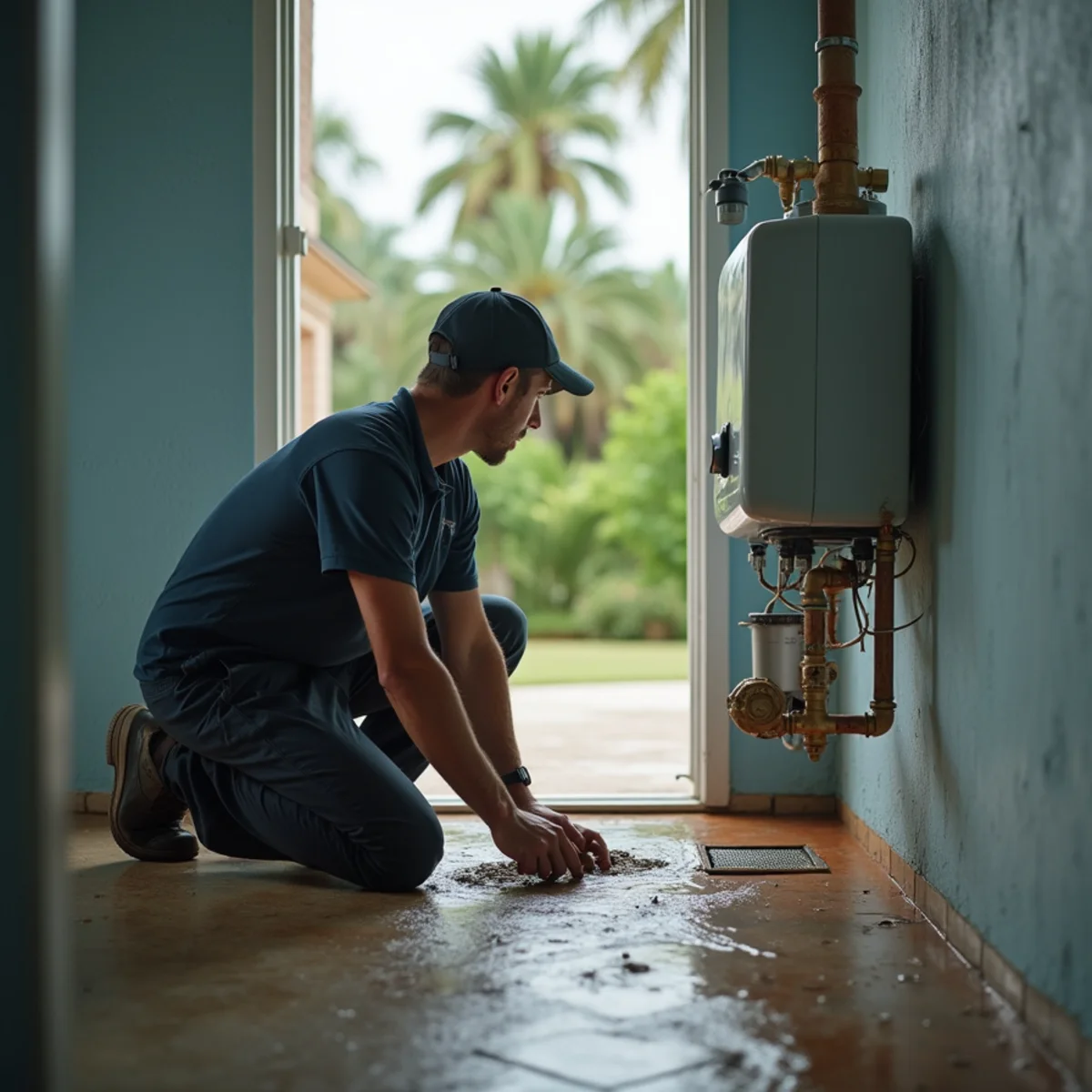
A water heater that was submerged, even partially, should not simply be turned back on. Flood water can damage the burner, gas controls, thermostat, and electrical components, and a compromised gas control valve is a genuine safety hazard. Do not relight a gas unit or restore power to an electric one until it has been inspected. In many cases a flooded heater needs replacement rather than repair, because internal components are not designed to be submerged. Have it evaluated before you trust it with hot water again.
Backflow and well concerns
If your home has a backflow preventer, flooding can foul or damage it, and it should be checked to make sure it is still protecting your drinking water from cross-contamination. Homes on private wells face added risk: flood water can enter the wellhead and contaminate the supply, so the water should be tested and the system disinfected before use. These are not do-it-yourself guesses after a flood; they protect the water your family drinks.
Document for insurance, then call
Photograph and video all water lines on walls, damaged fixtures, the water heater, and any sewage intrusion before you clean up. Note dates and keep receipts for mitigation. Remember that flood damage from rising water requires a separate flood policy, while some sudden plumbing failures fall under homeowners coverage, so document thoroughly and let your carrier sort the categories. When you are ready for professional help, our line is answered 24/7, and every plumber we send is licensed and insured in Florida. Homeowners in Holiday and Oldsmar call us after storms to confirm their systems are safe before returning to normal use.
A safe order for getting water service back
Once the immediate danger passes, restore your plumbing in a deliberate sequence rather than all at once. First, confirm with your utility that both water and sewer service, including any lift station serving your street, are operating normally. Next, have the water heater and any gas appliances inspected before you relight or repower them. Then run a single fixture and watch how it drains before trusting the whole system; a slow or gurgling drain means stop and investigate. Only after those checks should you return to normal water use.
If a camera inspection of the sewer line is warranted, do it before you rely on the drains for daily life, because a crack or blockage hidden by silt will only reveal itself through a backup at the worst moment. Taking these steps in order costs a little patience and saves you from compounding storm damage with a preventable plumbing failure. When anything looks off, our line is answered around the clock, and the price is confirmed at your property before any work begins.
Flooded and unsure about your plumbing?
Call Red Eagle Plumbers 24/7 at (858) 363-8298. We inspect sewer lines, water heaters, and backflow, with the price confirmed before work starts.