Signs a drain needs professional cleaning
A drain rarely fails all at once. It warns you first. Water starts pooling around your feet in the shower, the kitchen sink takes longer to empty after every meal, and you hear a gurgle from a nearby fixture when the washing machine drains. Those are the early signals that a partial blockage is building. Ignore them long enough and a slow drain becomes a full stop, usually at the worst possible time.
Call it in before it becomes a backup if you notice any of the warning signs below. A drain that is merely slow is far cheaper and cleaner to clear than one that has already overflowed onto a bathroom floor.
- Water drains slowly or backs up in sinks, tubs or showers
- Gurgling sounds from drains or a toilet when another fixture runs
- Bad odors rising from a drain, especially in the kitchen
- A toilet that bubbles or drops its level when the tub drains
- Multiple fixtures clogging at the same time (a main-line warning sign)
- Water appearing at a floor drain or the lowest fixture in the house
Kitchen, bathroom and laundry drain clogs
Individual fixture clogs each have their own personality. Kitchen drains clog on grease, starches and food scraps that congeal into a paste inside the pipe, especially where the line makes a turn. Bathroom sinks and tub drains choke on hair bound together with soap scum. Laundry lines catch lint and detergent residue, and older ones narrow further from scale. Toilets block on wipes, hygiene products and the occasional child's toy.
For a single blocked fixture we clear the trap and the branch line back to where it meets the main, then run water to confirm full flow has returned. If a fixture clogs repeatedly, that is a clue the problem is deeper than the trap, and it is worth looking further before you keep paying for the same quick fix. That is where a camera earns its keep.
Main sewer line clogs
When several fixtures back up together, or when the lowest drain in the house, often a tub or a floor drain, starts flooding while you use water elsewhere, the blockage is in the main line, not a single branch. This is the one you do not want to wait on. A main-line clog can push sewage back into the house, and once it does the cleanup is a health hazard, not just an inconvenience.
We clear main lines through the cleanout with the right size cable or a hydro jet, then camera the line to see what caused the blockage. Sometimes it is a simple grease or paper obstruction. Other times the camera reveals roots or a failing pipe, which moves the conversation toward sewer line repair rather than another cleaning. Either way, you see what we see.
Drain backing up right now?
Call (858) 363-8298 for 24/7 answering. We will get a plumber out to clear it and tell you exactly what caused it.
How we clear drains: cable machine, hydro jetting, camera inspection
There is no single tool that is right for every drain, and matching the method to the pipe is what separates a lasting clear from a temporary one. We carry the full range and choose based on what the line is made of, how old it is, and what is actually blocking it.
Cable machine (rooter)
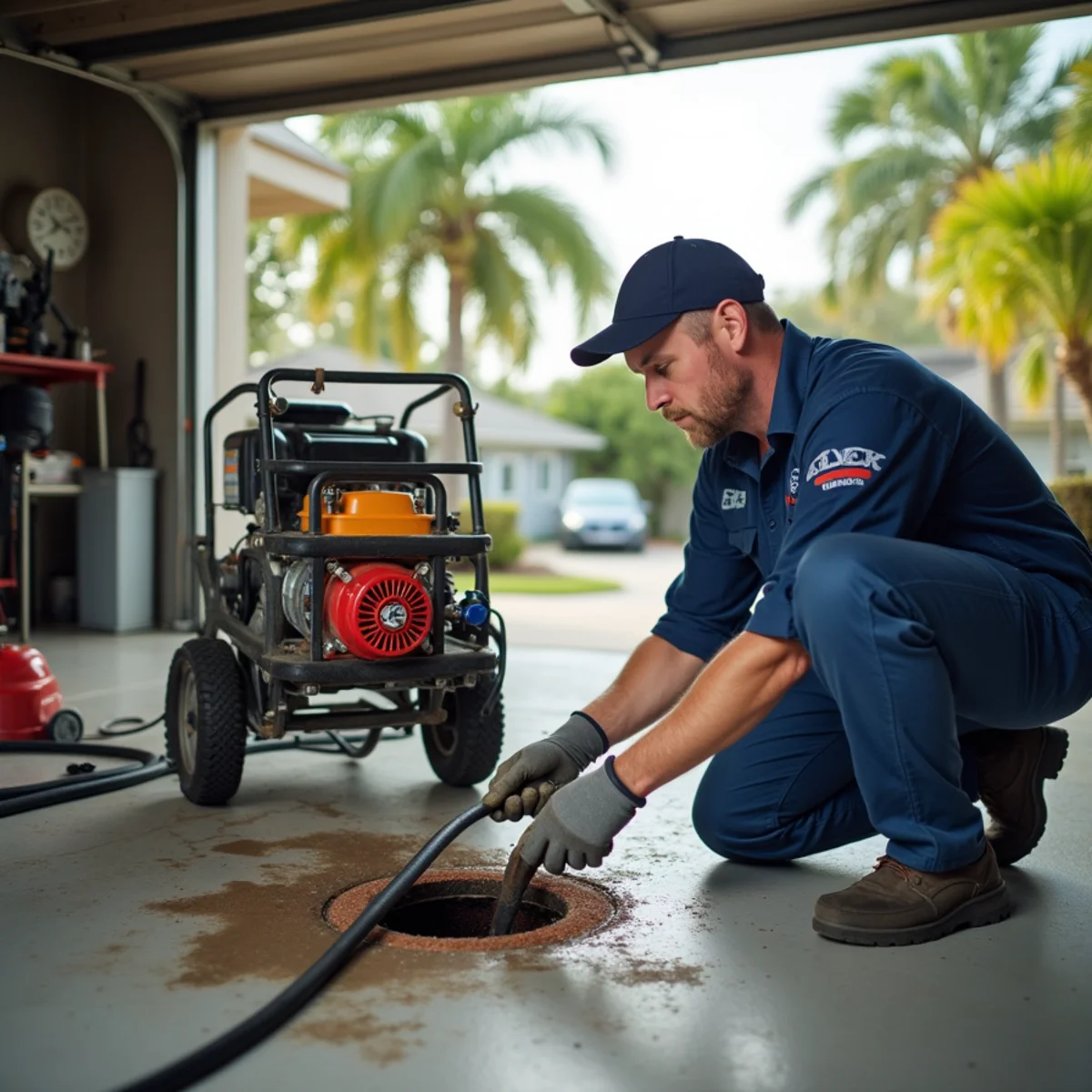
A motorized cable, or snake, is the workhorse for most clogs. It bores through the blockage and can cut small roots. It is fast, effective and gentle enough for lines where a more aggressive method is not warranted. For many kitchen and bathroom clogs, this is all a drain needs.
Hydro jetting
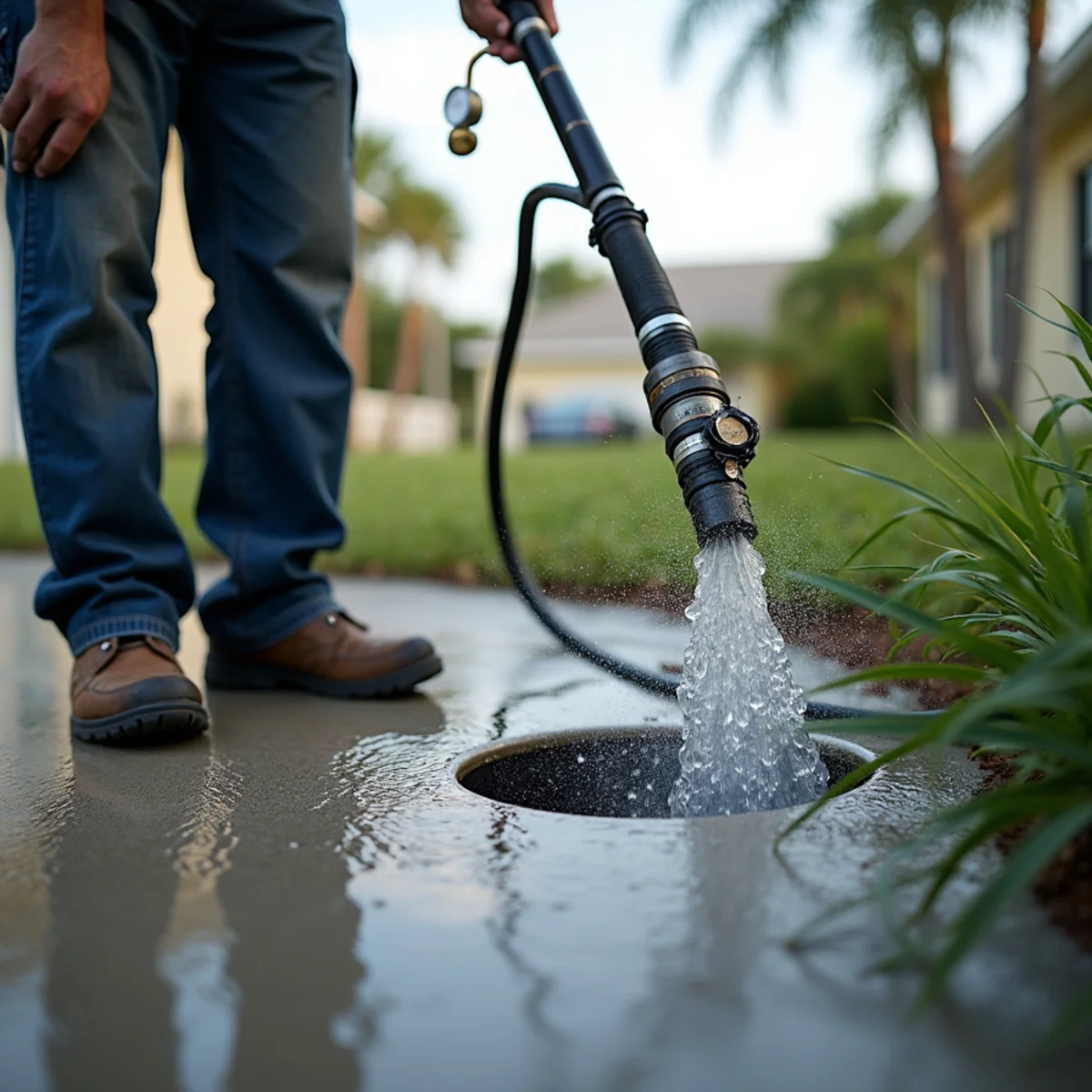
Hydro jetting uses high-pressure water to scour the full inside diameter of the pipe, stripping away grease, scale and root hair that a cable only punches a hole through. It is the best choice for heavy grease in kitchen lines and for restoring flow in pipes that keep re-clogging. On old, fragile cast iron we assess condition with a camera first, because jetting pressure has to be matched to what the pipe can safely take.
Camera inspection
A drain camera turns guesswork into fact. We send it through the cleared line to confirm the blockage is gone and to look for the underlying cause: a belly holding water, root intrusion, a broken section, or scale narrowing the pipe. If you are buying a home in the area, a camera inspection of the sewer line is one of the smartest few hundred dollars you can spend before closing.
Why drains clog in Tarpon Springs: cast iron scale, oak roots, grease, sandy soil
Local conditions make drain problems especially common here. Homes built before 1975 typically have cast iron drain lines, and after decades in Florida ground those pipes scale up internally with rust and mineral crust that narrows the passage and snags everything that flows past. A pipe that started at four inches can be functionally half that. The big live oaks that give these neighborhoods their shade send roots toward the moisture in sewer joints, and once a root finds a crack it grows into a mat that catches waste.
Sandy soil and a high water table add to it. Ground shifts, pipes settle, and low spots, called bellies, form where water and solids pool instead of flowing away. Layer very hard water and everyday grease on top of aging cast iron, and you have drains that need attention more often than a newer home built with PVC. Understanding your home's pipe material is half the battle, and our guide to cast iron drain pipes in Florida homes explains what to watch for.
Need a plumber in Tarpon Springs now?
Tired of the same drain clogging over and over? Call (858) 363-8298 and we will camera the line to find out why.
What not to pour down an old drain line
A little prevention keeps you off the emergency schedule, and it matters more with aging cast iron than with new plastic pipe. The habits below are the ones we see cause the most avoidable backups in older Tarpon Springs homes.
- Cooking grease and oil — pour it into a can and trash it; it hardens inside the pipe.
- Coffee grounds, rice and pasta — they swell and pack together into a plug.
- Wipes labeled flushable — they do not break down and are a leading cause of clogs.
- Harsh chemical drain openers — they can damage old pipes and rarely clear a real blockage.
- Paper towels, cotton and hygiene products — flush only what is meant to be flushed.
What affects drain cleaning cost
The price to clear a drain depends on which line it is, how bad the blockage is, how the pipe is accessed, and what method the job calls for. Clearing a single bathroom sink through an accessible cleanout is a small job. Clearing a fully blocked main line with roots, at night, that first requires locating a buried cleanout, is a bigger one.
- Which drain — a branch fixture line versus the main sewer line.
- Access — a ready cleanout is quick; no cleanout means more time to reach the line.
- Method — cabling costs less than hydro jetting; a camera inspection may be added to diagnose repeats.
- Severity — a light clog clears fast; heavy grease, scale or roots take longer.
- Timing — after-hours and weekend calls carry higher rates.
As directional market ranges, not a quote, basic drain cleaning in this area commonly runs about $150 to $450, a main-line clearing roughly $250 to $500, hydro jetting about $300 to $800, and a camera inspection about $150 to $400. Your actual price is confirmed at the property, and you approve it before we start. Our Tarpon Springs plumber cost guide breaks these numbers down further.
Areas we cover around Tarpon Springs
Our drain crews work throughout Tarpon Springs, including the older homes near Historic Downtown, the Sponge Docks, Whitcomb Bayou and Spring Bayou where cast iron lines are common. We also cover nearby Palm Harbor, Holiday and Trinity, with the complete list on our service areas page. When a clog turns out to be a bigger problem, our plumbing repair and emergency plumbing teams are the same trusted local plumbers.
Get your drains flowing again
Call (858) 363-8298 for 24/7 drain cleaning in Tarpon Springs, with a price before we start.