
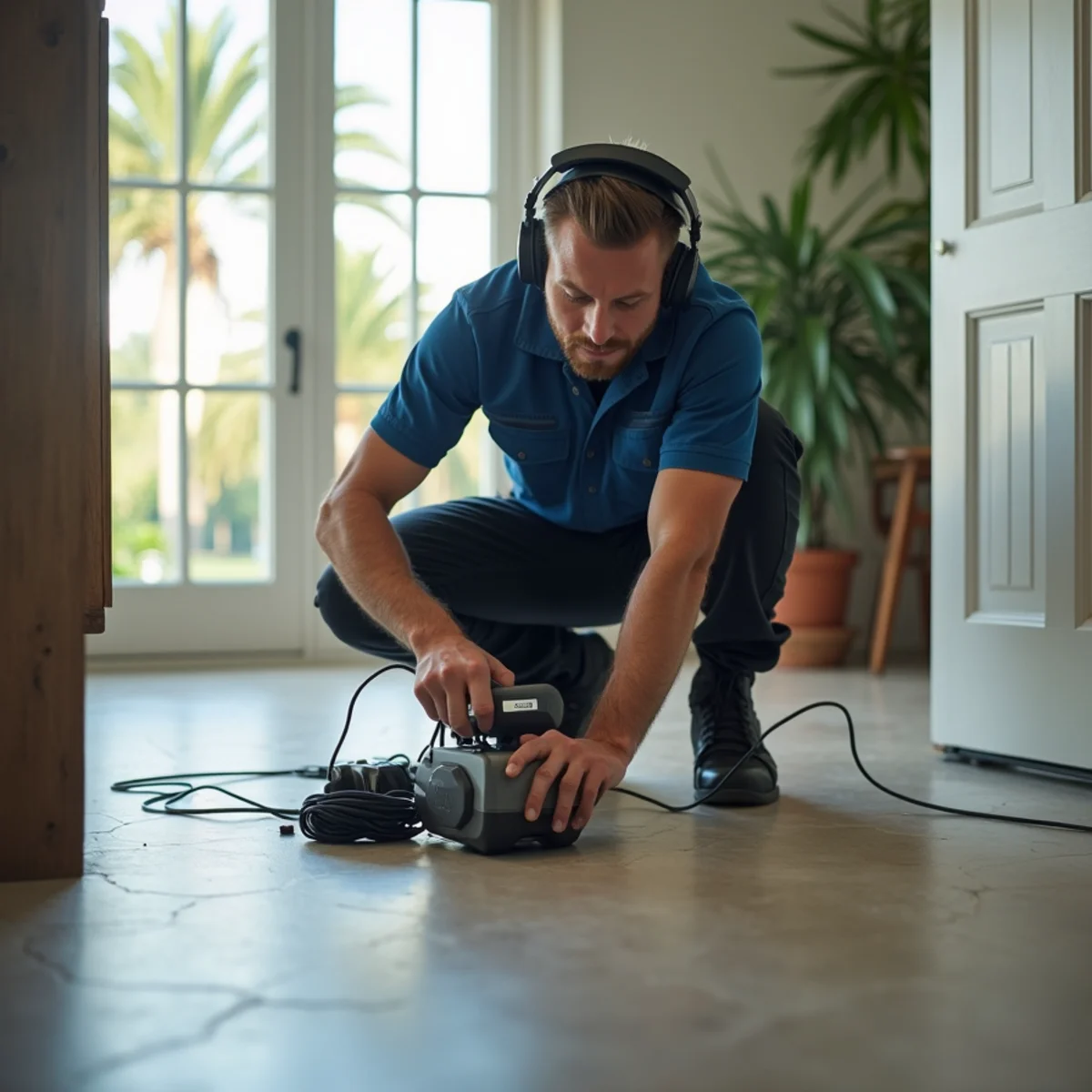
A slab leak announces itself through seven common signs: a warm or hot spot on the floor, an unexplained jump in your water bill, the sound of running water when everything is off, a drop in water pressure, new cracks in flooring or walls, damp or musty spots and mildew, and a water meter dial that keeps moving after you shut off every fixture. If you notice one or more, act quickly. A slab leak is a pipe leaking beneath the concrete foundation, and in Florida's slab-on-grade homes it can undermine flooring and foundations if ignored. Here is how to recognize each sign and confirm it yourself.
The 7 signs, in order of how often we see them
1. Warm or hot spots on the floor
A leak in a hot-water line under the slab heats the concrete above it. If one area of tile or vinyl feels warm underfoot for no reason, suspect a hot-line slab leak.

2. An unexplained spike in your water bill
Usage that jumps with no change in habits is one of the earliest and most reliable clues that water is escaping somewhere you cannot see.
3. The sound of running water with everything off
With all fixtures and appliances shut down, a faint hiss or rushing sound in the floor or walls points to an active leak beneath the slab.

4. Low or dropping water pressure
Water escaping under the slab means less reaches your fixtures, so pressure fades throughout the house even when nothing is obviously wrong.
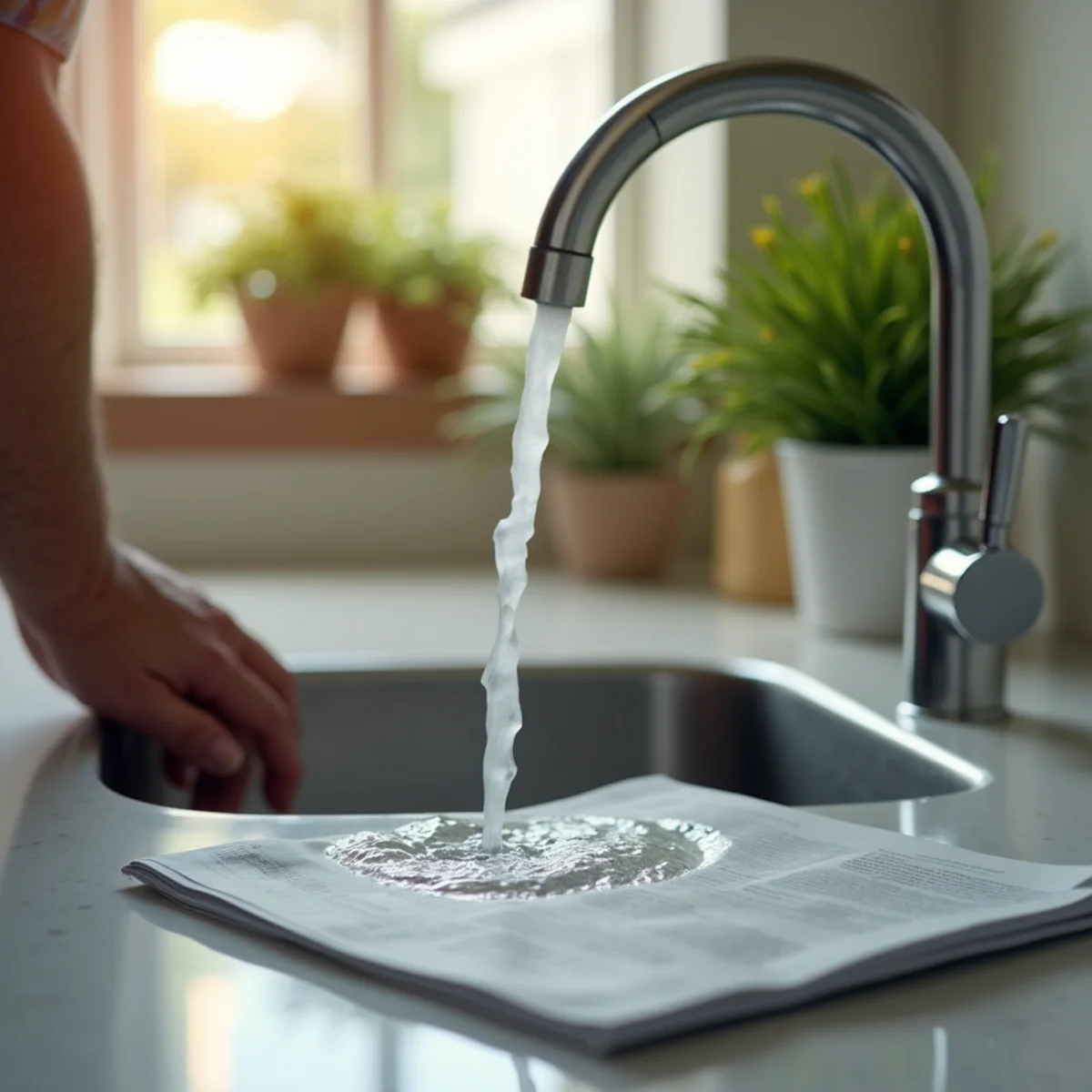
5. Cracks in flooring, tile, or walls
As water erodes the soil under the slab, the foundation shifts, and hairline cracks appear in floors and drywall.
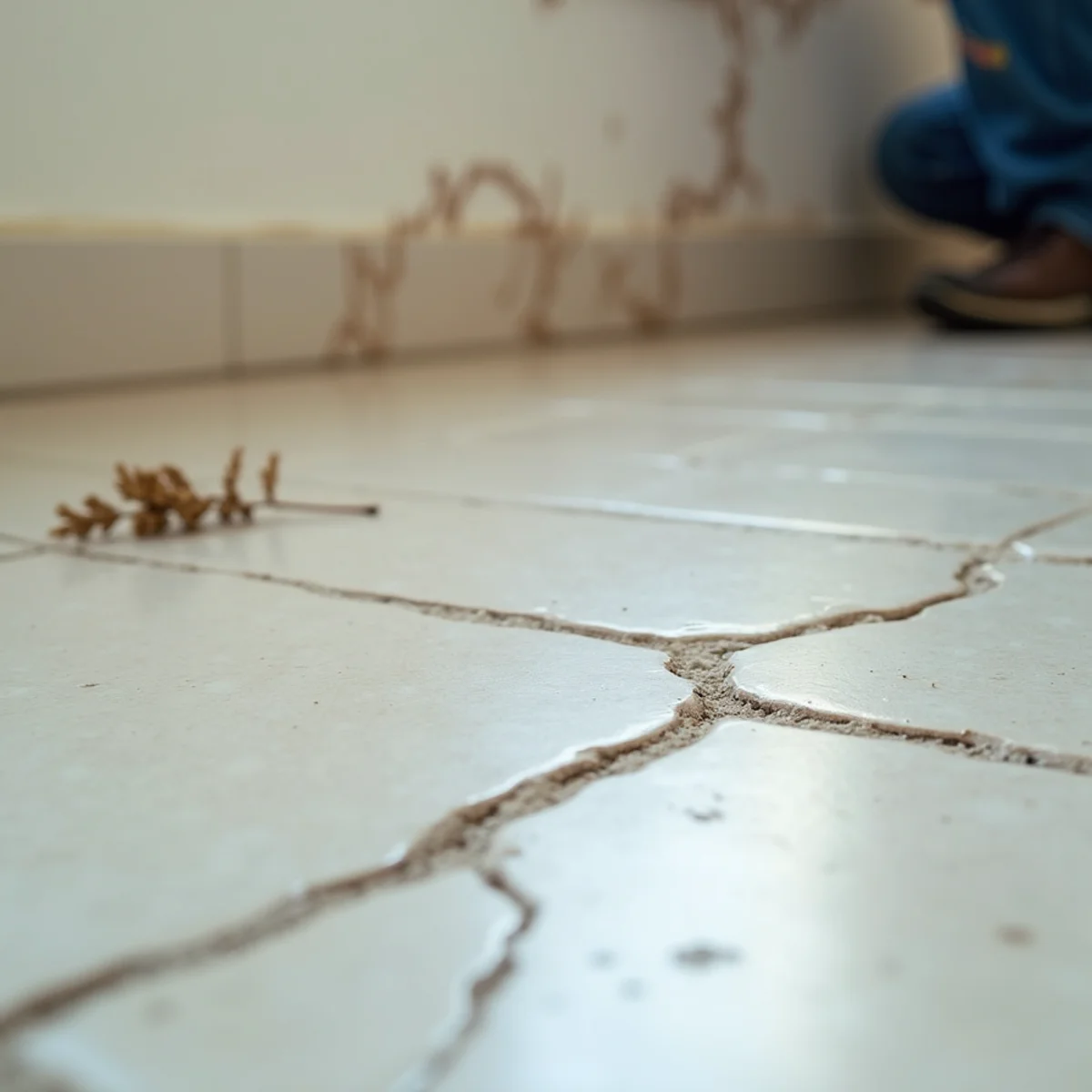
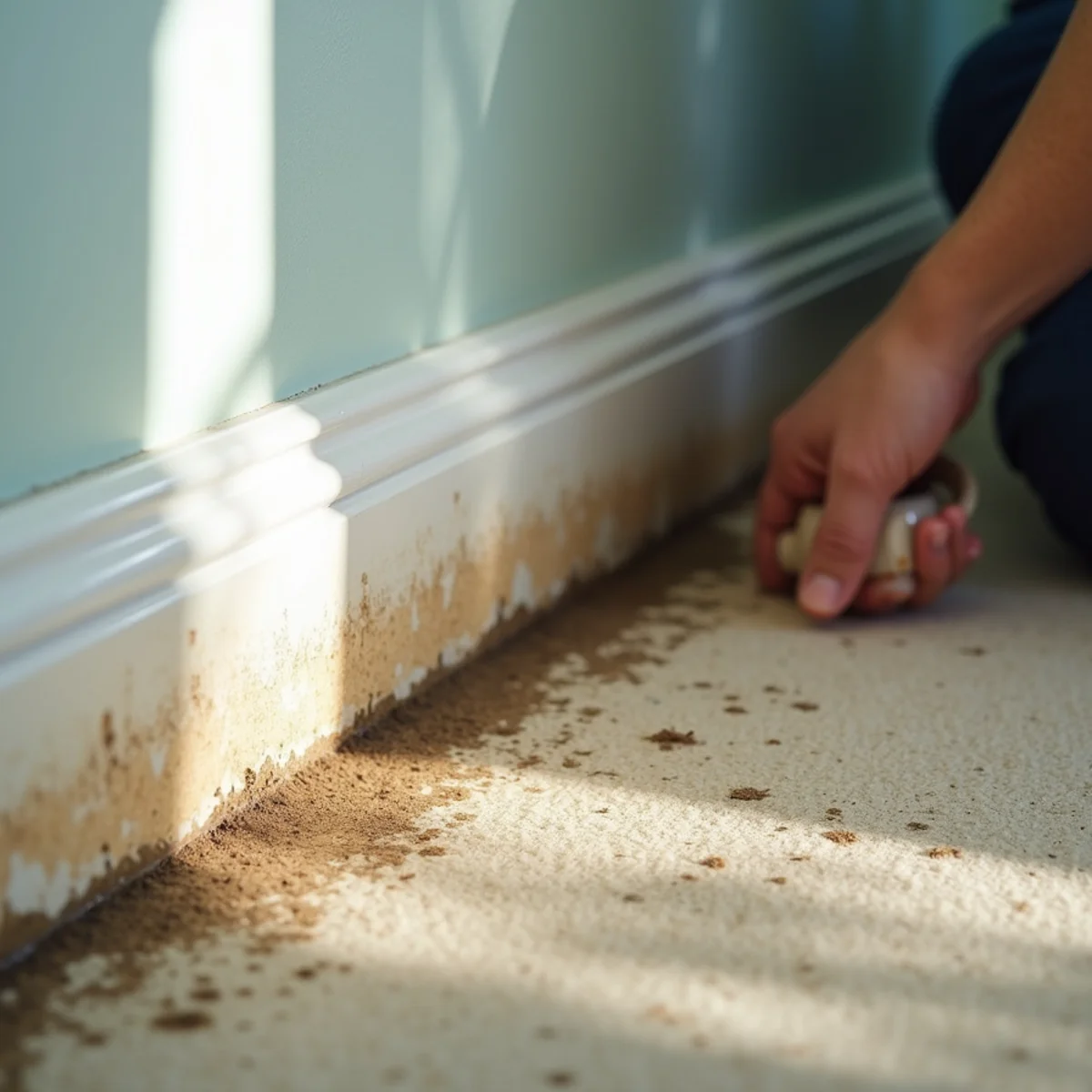
6. Damp spots, mildew, or a musty smell
Moisture wicking up through the slab shows as damp carpet, warped wood, or that persistent musty odor near the floor.
7. A meter dial that keeps moving
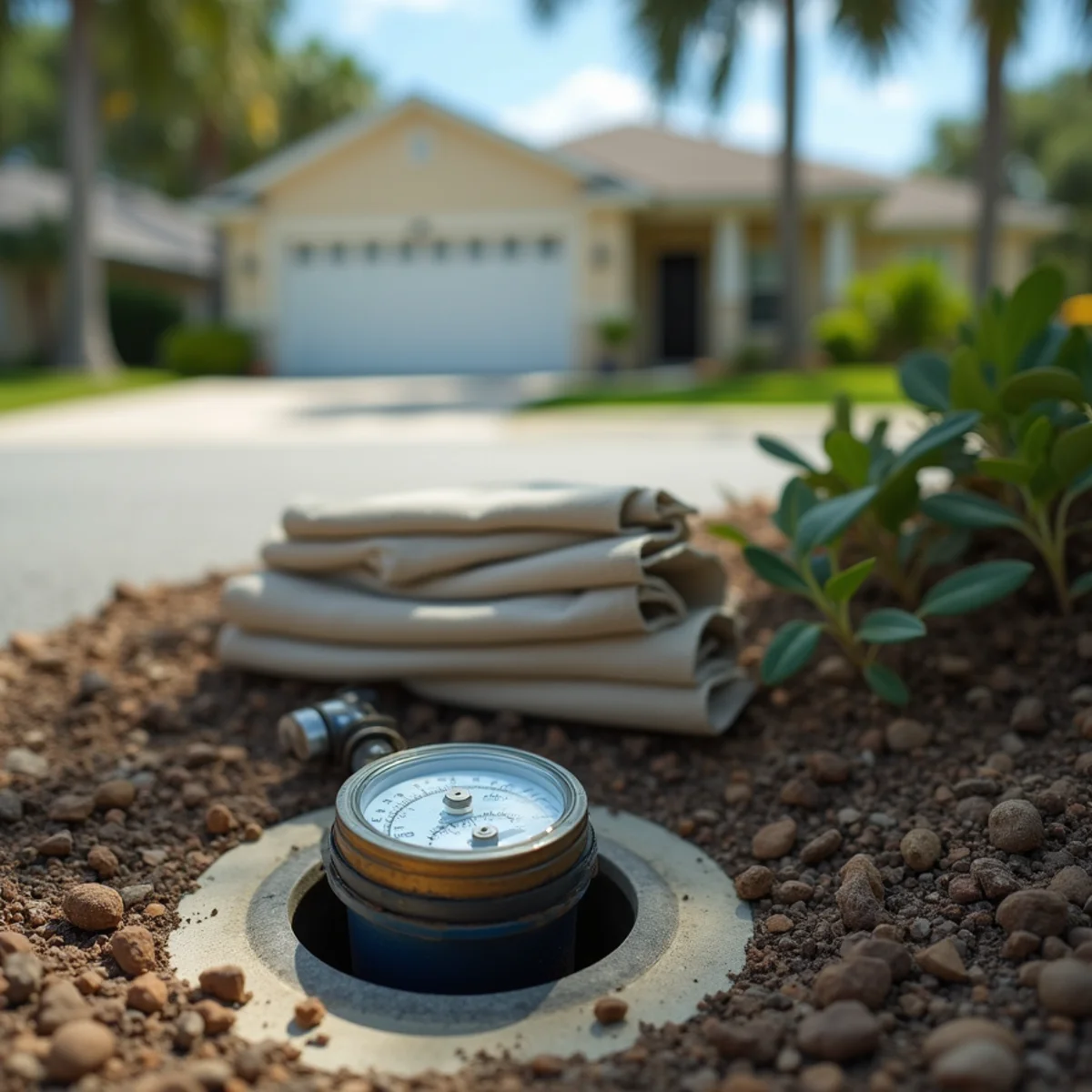
The definitive test, described below, uses your own water meter to confirm hidden flow when every fixture is off.
The 10-minute meter test you can do yourself
You can confirm a hidden leak in about ten minutes. Turn off every water-using fixture and appliance in the house, including ice makers and irrigation. Find your water meter, usually in a box near the street, and note the position of the small leak-indicator dial or the numbers. Wait ten minutes without using any water. If the dial has moved or the reading changed, water is flowing somewhere with everything off, which points to a leak, and if the rest of the house is dry, that often means it is under the slab.
Isolate before you panic
If the meter moved, shut off the valve where the line enters the house and repeat the test. If the meter stops, the leak is inside the home, possibly the slab. If it keeps moving, the leak may be on the service line between the meter and the house.
Why Florida slab homes are prone to this
Most Tarpon Springs and Pinellas County homes are built slab-on-grade, meaning the water and sometimes drain lines run through or beneath a concrete foundation poured directly on the ground. With a median local build year around 1984, many of those lines have been in the ground for four decades. Our very hard water accelerates internal corrosion and scale, and shifting sandy soils add stress at fittings. Copper lines can also corrode from the outside where they contact certain soils or concrete. The combination is why slab leaks are a routine call in this region rather than a rare event.
The stakes are higher than a wet floor. Water escaping under a slab washes away the supporting soil, which is what leads to foundation cracks, uneven floors, and doors that stop closing correctly. On a hot-water leak, you are also paying to heat water that never reaches a tap, so the bill climbs while the damage grows. Because the pipe is buried in concrete, there is no drip you can catch in a bucket; the only defense is recognizing the signs early and confirming them fast.
It is worth knowing the difference between a fresh-water slab leak and a drain leak under the slab. A pressurized supply-line leak shows up as a moving meter, higher bills, and sometimes warm floors. A drain or sewer leak under the slab is not pressurized, so the meter test will not catch it; instead you may notice sewage odors, damp spots, or persistent musty smells with no meter movement. Telling them apart guides which detection method we use.
How the leak is found and fixed
The goal is to pinpoint the leak before touching any concrete. Our professional leak detection uses acoustic listening equipment, pressure testing, and sometimes thermal or line-tracing tools to locate the leak within the slab as precisely as possible. Once found, repair options include spot repair, where a small section of slab is opened to fix the pipe directly; rerouting, where the bad line is abandoned and a new line is run through walls or the attic to bypass the slab; or, if multiple lines are failing, a full repipe. The right choice depends on the pipe's age, material, and how many problems the system already has.
Slab leak repair is directional in the $1,500 to $4,500 range depending on access and method, and detection typically runs $200 to $600, but the final price is always confirmed at your property with a price before work starts. Every plumber we send is licensed and insured in Florida. Homeowners in Dunedin and nearby coastal communities call us early precisely because catching a slab leak at the warm-spot stage costs far less than waiting until floors buckle.
One more reason to act early: insurance. A slab leak caught quickly and documented as a sudden problem is a far stronger claim than damage that clearly accumulated over months. If you suspect a leak, photograph the warm spot, the water bill spike, and any cracks or damp areas before repairs begin, and report it promptly. Fast detection protects your home, your foundation, and your ability to recover part of the cost, so the meter test is worth running the moment you see a single sign.
Think you have a slab leak?
Call Red Eagle Plumbers at (858) 363-8298. We detect the leak precisely and give you repair options with a price before any work starts.