
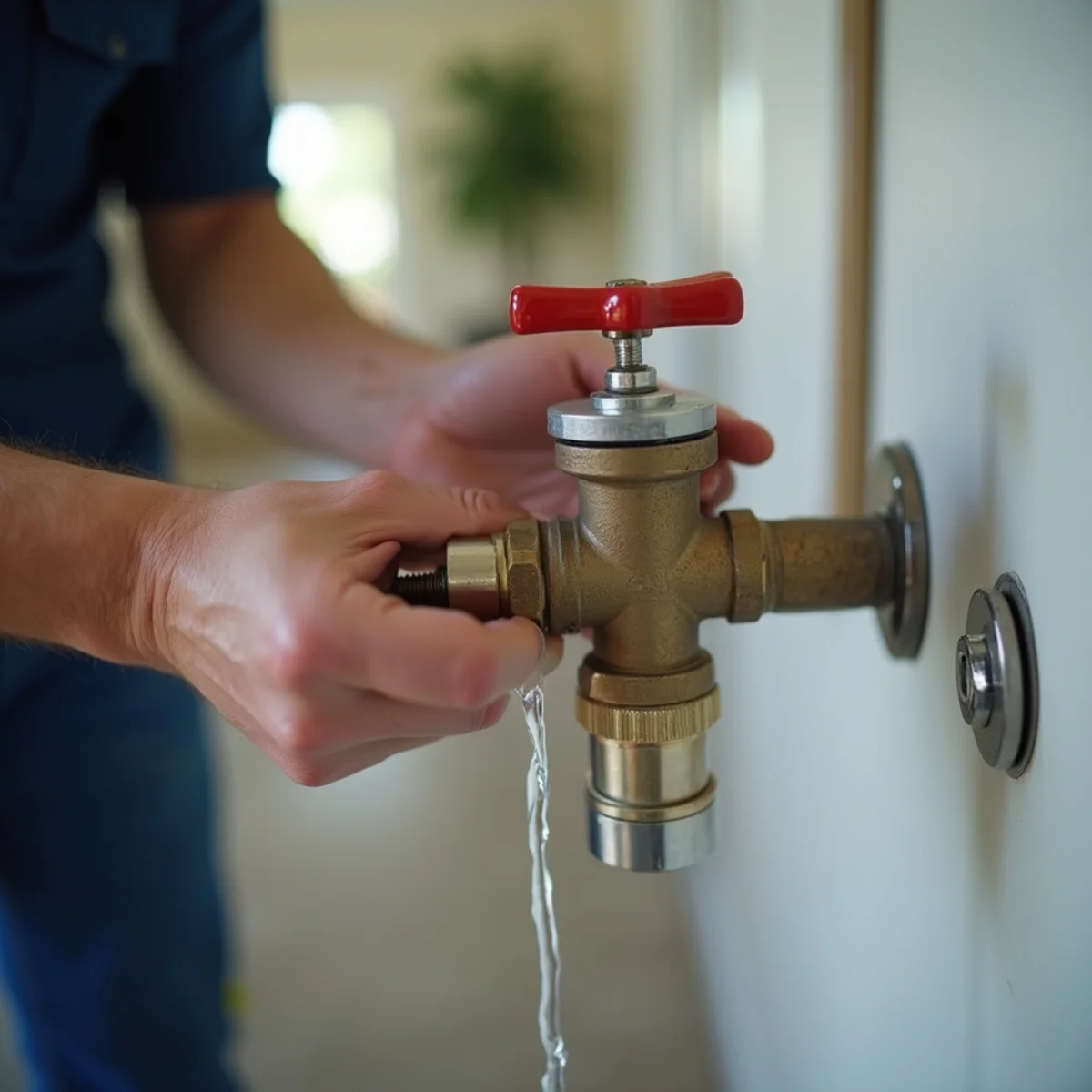
In a plumbing emergency, do these five things first: shut off the water at the fixture valve (or the main if you cannot find it), cut power to any area where water is near outlets or the panel, keep people and pets away from sewage, leave the building and call the gas company if you smell gas, and photograph everything before you clean up. Then call a licensed plumber. Water damage compounds fast, so the minutes before we arrive matter as much as the repair itself. This guide walks you through each step in order so you can act instead of panic.
Step 1: Stop the water
Most emergencies get smaller the moment the water stops. Every toilet, sink, and water heater has a local shut-off valve nearby. For a toilet, it is the small oval or football-shaped handle on the wall behind the bowl; turn it clockwise until it stops. For a sink, look under the cabinet for two valves and close the one feeding the leak. If the leak is from an appliance, fixture, or pipe you cannot isolate, shut off the main.
In most Tarpon Springs and Pinellas County homes built on slab, the main shut-off is where the water line enters the house, often in the garage, near the water heater, or at an exterior wall by the front hose bib. There is also a curb stop at the city meter box near the street, which usually needs a meter key to turn. Knowing where these are before an emergency saves precious minutes, so locate and test your main valve on a calm afternoon. If a valve is seized or spins without stopping the flow, that is a repair worth scheduling before it becomes urgent.
Once the main is closed, open a faucet at the lowest point in the house, such as an outdoor hose bib or a first-floor tub. This drains the water still sitting in the pipes and relieves pressure, which reduces how much escapes from a burst before we arrive. If the leak is from a water heater, close the cold-water inlet valve on top of the tank rather than fighting the whole main. A few labeled valves and a meter key hanging by the panel turn a frantic search into a ten-second fix, so take a few minutes now to tag them.
Step 2: Protect people, electrical, and gas
Water and electricity are the real danger, not the puddle. If water is spreading toward outlets, appliances, or the electrical panel, and you can reach the breaker safely without standing in water, shut off power to that area. If you cannot reach the panel without stepping into water, stay back and wait for help. Never touch a submerged outlet or a running appliance sitting in water.
Treat any sewage backup as a health hazard. Keep children and pets out of the affected rooms, do not run other drains that share the line, and avoid using fixtures on that side of the house until the blockage is cleared. If you smell natural gas or rotten eggs near a water heater or gas appliance, do not flip switches or light anything. Leave the building, then call your gas utility from outside. Gas safety is one place where the right move is to leave it to the professionals.
Step 3: Contain and document
Once the water is off and everyone is safe, slow the spread. Move furniture and rugs off wet flooring, lay down towels, and put a bucket under an active drip. Then document before you clean. Photograph and take short videos of standing water, the source, damaged drywall, baseboards, cabinets, and any ruined belongings. Insurers respond to evidence, and a sudden, accidental failure is treated very differently from slow, hidden wear. Save receipts for anything you buy to stop the damage.
The 24-48 hour drying window
The EPA notes that wet materials should be dried within 24 to 48 hours to limit mold growth. After the water is stopped, run fans and a dehumidifier, and open cabinets so trapped moisture can escape. Fast drying protects both your home and your insurance claim.
Quick reference: first action by problem
| Problem | First action before the plumber arrives |
|---|---|
| Burst or leaking pipe | Shut the main, then open a low faucet to drain remaining pressure |
| Overflowing toilet | Close the toilet's shut-off valve behind the bowl; do not flush again |
| Water heater leaking or spraying | Turn off the cold-water valve on top; shut power or gas to the unit |
| Sewage backing up into tub or drains | Stop using all water; keep people and pets away from the area |
| Smell of gas near an appliance | Do not use switches or flames; leave and call the gas company |
| Water near outlets or the panel | Cut the breaker only if you can reach it without standing in water |
Step 4: Know when to call
Call a plumber right away for any burst pipe, sewage backup, water heater failure, or leak you cannot stop at a valve. These are not wait-until-morning problems. Our line is answered 24/7, and every plumber we send is licensed and insured in Florida. When you call, tell us what is leaking, whether the water is off, and where the damage is, so we arrive ready. We confirm the final price at your property and give you a price before any work starts, so there is no guessing while you are already stressed.
If you are in a flood-prone or slab-on-grade home, keep our number saved before you need it. Homeowners across the area rely on our 24/7 emergency plumbing team for exactly these moments, and neighbors in Palm Harbor and nearby communities call the same line day or night. Preparation is what turns a disaster into an inconvenience.
Prevent the next emergency
Most of the emergencies we respond to were building quietly for weeks. A few habits dramatically lower the odds of the next one:
- Replace rubber washing-machine and dishwasher hoses with braided stainless steel, and check them once a year.
- Watch your water bill; a sudden increase with no change in usage is often the first sign of a hidden leak.
- Know the age and material of your pipes, especially in homes built before 1975 or between 1978 and 1995, and plan replacements before they fail.
- Never pour grease down a drain, and keep wipes out of toilets, even the ones labeled flushable.
- Flush your water heater yearly so sediment does not corrode the tank into a sudden failure.
- Have a plumber inspect exposed supply lines and valves periodically so small drips are caught before they burst.
None of these prevents every emergency, but together they turn many would-be disasters into a scheduled repair on your terms. When something does go wrong, act on the steps above in order, and call as soon as the water is off and everyone is safe.
Plumbing emergency right now?
Call Red Eagle Plumbers 24/7 at (858) 363-8298. We answer around the clock and confirm your price before any work begins.